Understanding Home‑Based Nursing Care in Dubai
Home‑based nursing is changing how healthcare works in the Emirates. Instead of shuttling frail seniors or post‑operative patients back and forth to clinics, families can arrange for licensed nurses to visit at home and handle wound care, vital‑sign monitoring, medication administration and even lab tests A nurse for patient at home focuses on one person at a time and adapts care plans to cultural preferences and medical history
This service suits Dubai’s busy lifestyle and harsh climate. The heat, traffic and long working hours make clinic visits daunting, especially for elderly or immunocompromised patients. By receiving care at home, patients avoid these stressors and reduce exposure to hospital‑acquired infections
Why Families Choose a Home Nurse in Dubai
Families often ask whether the investment in a private nurse is worth it. Several evidence‑based advantages make home nursing an increasingly popular solution. Dubai’s government data and local healthcare providers consistently highlight the following benefits:
- Comfort and familiarity. Staying in one’s own home surrounded by loved ones reduces stress and improves mental well‑being. Studies show that older adults recover faster in familiar surroundings and are happier at home than in a hospital Research on hospital‑at‑home programmes confirms shorter stays, fewer complications and higher patient satisfaction when care is delivered at home
- Personalised attention. Home nursing is inherently one‑on‑one. The nurse monitors the patient closely and adjusts treatment promptly, strengthening the caregiver–patient relationship Instead of juggling multiple patients, the nurse focuses entirely on your loved one, which leads to faster responses to their needs
- Independence and dignity. Seniors maintain control over their daily routines and social activities when they “age in place.” Nurses assist only as needed, fostering dignity and self‑reliance Home care is particularly important for elderly patients or those with chronic conditions who want to avoid institutionalisation
- Safety and infection control. Hospitals are high‑risk environments for infections. Receiving care at home reduces exposure to pathogens and minimises trips during heatwaves, offering a safer recovery space
- Relief for family caregivers. Professional nurses share the burden of daily care, assisting with medications, mobility and hygiene tasks. This prevents caregiver burnout and gives family members peace of mind
- Cost‑effectiveness. Home nursing is often cheaper than extended hospital stays. Expenses such as transport and overnight hospital fees are avoided, many insurance plans cover in‑home care, and preventing complications reduces the likelihood of costly readmissions
These advantages help explain why an increasing number of families choose nurses for patients at home. The combined benefits of convenience, personalised care and improved outcomes have made home nursing a cornerstone of Dubai’s healthcare ecosystem.
Types of Home Nursing Services Available in Dubai
Home nursing is not one‑size‑fits‑all. It encompasses a wide spectrum of services designed to support patients through every stage of recovery and chronic disease management. Understanding the options makes it easier to match your loved one’s needs with the right level of care. Major categories include:
1. Skilled Nursing Care for Complex Medical Needs
Registered nurses provide clinical treatments like wound dressing, IV medications, feeding tubes and oxygen therapy, bringing hospital‑level care directly to the patient’s bedside.
2. Post‑Operative and Rehabilitation Support
After surgery, nurses manage pain, prevent infection, ensure medications are taken correctly and educate families on wound care and mobility exercises, creating a structured path back to optimal health.
3. Chronic Disease Management
For chronic illnesses like diabetes or heart disease, home nurses monitor vital signs, manage medication schedules, teach self‑care techniques and provide dietary guidance to improve quality of life and reduce emergency visits
4. Wound Care and Diabetic Foot Management
People with diabetes or slow‑healing wounds benefit significantly from daily nurse visits. Nurses trained in sterile techniques change dressings, care for surgical incisions or foot ulcers, and teach proper foot‑care habits. Early detection of infection ensures proper healing without unnecessary trips to the emergency room.
5. IV Therapy and Medication Administration
For conditions requiring regular IV infusions such as antibiotics, iron or hydration therapy, home nurses administer treatments and manage injections and catheter changes so patients don’t have to commute
6. Elderly Care and Mobility Support
Home nursing reduces readmission rates by providing fall prevention, mobility exercises and rehabilitation support for older adults recovering from illness
7. Pediatric and Maternal Care
Home nursing supports ill children and new mothers by offering monitoring, breastfeeding support and infant care in the familiar comfort of home
8. Palliative and Comfort Care
Palliative nurses manage pain and symptoms at home, providing comfort‑oriented care and emotional support for patients and their families
9. Companion and Respite Care
Home nurses also fulfil non‑medical roles—offering companionship to combat loneliness and providing respite so family caregivers can rest. Spending time in conversation, engaging in light activities and ensuring the patient feels secure are vital components of holistic home care
10. Telemedicine and Remote Monitoring
Many providers now supplement in‑person visits with telehealth. Nurses schedule virtual check‑ins to discuss progress and adjust care plans. Smart monitoring devices keep healthcare teams updated between visits
How a Nurse for Patient at Home Supports Daily Living
A nurse for patient at home doesn’t just deliver medical treatments—she also becomes an integral part of the patient’s daily routine. Here are some of the ways home nurses enhance quality of life:
- Monitoring and early intervention. Regular checks of vital signs, blood sugar and oxygen levels allow nurses to spot changes early and address them before they become emergencies
- Medication management. Nurses organise pill boxes, administer injections and ensure medications are taken on time, simplifying complex regimens
- Education and empowerment. Through education on wound care, nutrition and self‑management strategies, patients and caregivers learn to take charge of their health
- Mobility and rehabilitation. Nurses assist with safe transfers, exercises and walking practice to prevent deconditioning and speed recovery
- Emotional support and companionship. By listening, conversing and offering reassurance, nurses nurture mental health alongside physical healing
- Family coordination. Acting as liaisons between the patient, their family and the broader healthcare team, nurses communicate changes, coordinate doctor visits and arrange additional services like physiotherapy or lab tests
Visualising the Benefits
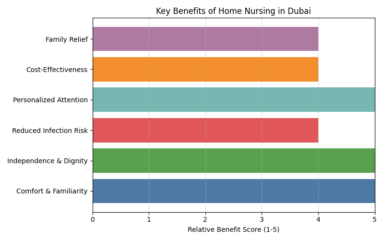
The graphic above summarises the most frequently cited advantages of home nursing, such as comfort, independence and reduced infection risk. Each bar represents a “benefit score” derived from various sources and highlights how patients and families consistently rate comfort, personalised attention and dignity as top reasons for choosing in‑home care.
Tips for Choosing the Right Home Nursing Provider in Dubai
Selecting a trustworthy provider is essential for peace of mind. When evaluating home nursing services, consider the following factors:
- DHA licence and credentials. Ensure the company and all nurses are licensed by the Dubai Health Authority
- Experience. Look for nurses experienced in conditions similar to your loved one’s and read reviews or ask for references
- Availability. Choose a provider offering 24/7 support and quick dispatch times
- Personalised care plans. The provider should design a customised plan and adjust it as the patient’s needs evolve
- Transparent communication. They should clearly communicate services, costs and schedules and answer questions
Why Choose EMAHS Home Nursing Services in Dubai?
EMAHS home nursing services in Dubai employ DHA‑licensed nurses who provide personalised care for post‑surgery recovery, chronic disease management and elderly support The team emphasises privacy, dignity and flexible scheduling, and even offers female nurses for those who prefer gender‑specific care Beyond nursing, EMAHS offers doctor‑on‑call visits, physiotherapy, lab tests and IV therapy, giving patients access to urgent medical help 24/7 Their commitment to personalised care plans and clear communication makes them a trusted choice for home healthcare in the Emirates
Conclusion: Bringing Professional Care Home
The rise of home nurse Dubai services signals a profound shift in how families manage health. With evidence showing faster recovery, greater independence and reduced infection risk, inviting a nurse into your home provides a compassionate alternative to hospital stays. A nurse for patient at home delivers personalised attention, supports daily activities and relieves caregiver stress—ensuring that healing happens in a place of comfort and dignity.
If you’re considering home nursing for yourself or a loved one, choose a provider that values professionalism, cultural sensitivity and flexibility. EMAHS embodies these qualities. Whether you need wound care after surgery, chronic disease management or simply someone to monitor an elderly parent, EMAHS’ team is ready to help. To book or learn more, contact EMAHS today and discover how compassionate in‑home nursing can make all the difference.