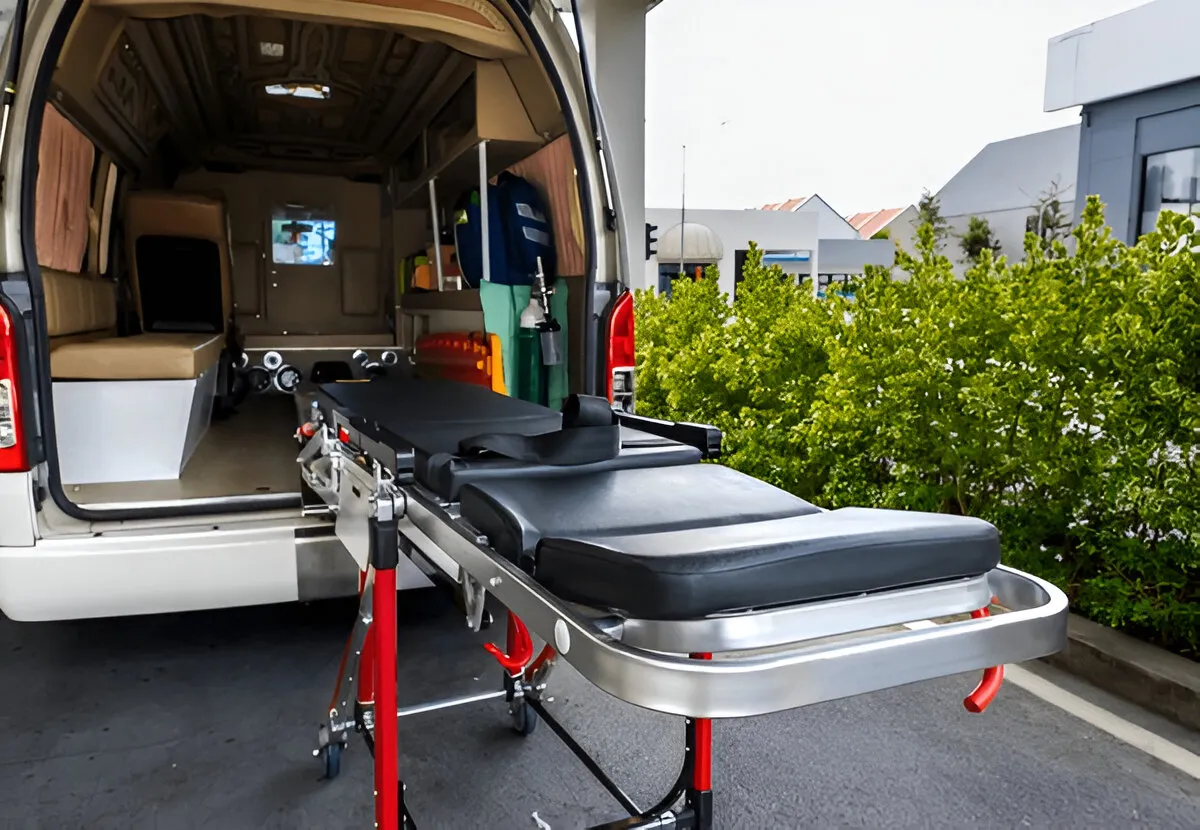
When a patient is medically stable but unable to sit upright or travel safely in a regular vehicle, stretcher ambulance transport can provide a safer and more comfortable solution. These services are designed for patients who need professional assistance during transport between homes, hospitals, rehabilitation centers, clinics, or other healthcare facilities.
Understanding when do you need stretcher ambulance transport can help families choose the right level of medical transportation while ensuring patient comfort and safety.
What Is Stretcher Ambulance Transport?
Stretcher ambulance transport is a specialized patient transportation service for individuals who need to remain lying down during travel. The patient is transferred using appropriate patient transport stretchers and secured safely inside a medically equipped vehicle.
Depending on the patient’s condition and service requirements, the transport team may provide assistance with:
- Safe patient lifting and transfer
- Stretcher positioning and securing
- Basic patient monitoring
- Oxygen support where required
- Assistance during pickup and drop-off
- Coordination between healthcare facilities
The level of medical support should always match the patient’s condition and transport requirements.
When Do You Need Stretcher Ambulance Transport?
A stretcher ambulance may be appropriate when a patient cannot safely travel while sitting in a car or wheelchair.
1. After Surgery
Patients recovering from surgery may experience pain, weakness, or movement restrictions. Sitting for an extended period during travel may be uncomfortable or medically unsuitable.
Stretcher ambulance transport allows the patient to remain in a supported lying position while being transferred safely.
2. Limited Mobility
Elderly patients and individuals with mobility limitations may need assistance when moving between locations.
Professional transport staff can help transfer the patient from the bed to the ambulance and from the ambulance to the destination.
3. Fractures and Orthopedic Injuries
Patients with fractures, severe joint injuries, or other orthopedic conditions may need to avoid unnecessary movement.
Using suitable patient transport stretchers helps keep the patient in a stable position during transportation.
4. Hospital Discharge
Some patients are medically ready to leave the hospital but are not physically able to travel home in a regular vehicle.
A scheduled stretcher ambulance can provide a practical solution for safe hospital-to-home transfers.
5. Transfers Between Healthcare Facilities
Patients may need transportation between:
- Hospitals
- Rehabilitation centers
- Nursing facilities
- Specialist clinics
- Long-term care facilities
When the patient needs to remain lying down, stretcher ambulance transport may be the appropriate option.
6. Long-Distance Patient Transport
Long journeys can be difficult for patients with pain, weakness, or restricted mobility. A stretcher-based transport service can provide a more suitable position and professional assistance throughout the journey.
Who Can Benefit from Patient Transport Stretchers?
Patient transport stretchers may be suitable for:
- Elderly patients with mobility challenges
- Post-surgery patients
- Patients recovering from serious illness
- Individuals with fractures or orthopedic injuries
- Bedridden patients
- Patients requiring hospital discharge transport
- Individuals who cannot comfortably sit upright
Before booking, it is important to provide accurate information about the patient’s medical condition so the provider can arrange the appropriate transport service.
How Does Stretcher Ambulance Transport Work?
The process is generally planned around the patient’s condition and destination.
Step 1: Share the Patient’s Requirements
When booking, provide details about the patient’s mobility, medical needs, pickup location, and destination.
Step 2: Transport Assessment
The provider determines whether stretcher transport is suitable and what level of support may be required during the journey.
Step 3: Safe Patient Transfer
The transport team assists the patient from the bed, room, or healthcare facility onto the stretcher using appropriate handling procedures.
Step 4: Secure Transportation
The patient is safely positioned and secured for travel. Medical equipment or monitoring may be available depending on the type of service and patient requirements.
Step 5: Arrival and Handover
At the destination, the team assists with transferring the patient safely to the designated location or healthcare facility.
Stretcher Ambulance Transport vs Regular Vehicle
| Feature | Regular Vehicle | Stretcher Ambulance Transport |
|---|---|---|
| Patient Position | Usually seated | Lying down |
| Mobility Support | Limited | Professional assistance |
| Patient Transfer | Family may need to assist | Trained staff assist |
| Medical Equipment | Not available | Depends on service level |
| Suitable for Bedridden Patients | No | Yes |
| Comfort for Limited Mobility | Limited | Designed for patient transport |
For patients who cannot safely sit or move independently, stretcher transport can significantly reduce the difficulty of traveling.
Benefits of Professional Stretcher Ambulance Transport
Safe Patient Handling
Moving a patient incorrectly can increase pain or worsen an existing injury. Trained professionals use appropriate techniques to help transfer and position patients safely.
Greater Comfort
Remaining in a lying position can be more comfortable for patients recovering from surgery, injuries, or serious illness.
Reduced Stress for Families
Family members do not have to manage difficult patient transfers or arrange unsuitable transportation.
Door-to-Door Assistance
Transport teams can assist with patient movement from the pickup location to the destination, depending on the service arrangement.
Suitable Medical Support
The transport provider can arrange an appropriate level of support based on the patient’s condition and needs.
When Is Stretcher Transport Not Suitable?
It is important to understand that scheduled stretcher ambulance transport is not a replacement for emergency medical response.
If a patient has severe chest pain, serious breathing difficulties, loss of consciousness, signs of stroke, severe bleeding, or another life-threatening condition, immediate emergency medical assistance should be requested.
For planned transfers involving medically stable patients, a stretcher transport service may be a suitable option.
How to Choose the Right Stretcher Transport Service
Before booking, consider the following factors:
Check Licensing and Qualifications
Choose a properly licensed healthcare or medical transport provider with trained staff.
Explain the Patient’s Condition Clearly
Accurate information helps the provider arrange suitable equipment and medical support.
Confirm the Type of Stretcher and Support Available
Ask what type of patient transport stretchers and monitoring equipment are available for the journey.
Confirm Pickup and Destination Details
Provide information about building access, floor numbers, elevators, and any mobility challenges at either location.
Discuss Scheduling and Costs
Confirm the appointment time, expected transport duration, and all applicable charges before booking.
Why Families Choose Stretcher Ambulance Transport in Dubai
For families managing elderly care, post-hospital recovery, or patients with mobility limitations, safe transportation can be a major concern.
Professional stretcher ambulance transport offers a practical solution by combining suitable patient positioning, trained assistance, and a more controlled transport environment.
Rather than relying on a regular vehicle, families can arrange transport specifically designed for patients who need additional support during travel.
Final Thoughts
Knowing when do you need stretcher ambulance transport can help you make safer decisions for a patient who cannot travel comfortably in a standard vehicle. From post-surgery transfers and hospital discharge to elderly care and limited mobility, professional stretcher transport provides a safer and more comfortable way to move patients between locations.
By choosing a qualified provider and clearly explaining the patient’s needs, families can ensure the appropriate stretcher ambulance transport and patient transport stretchers are arranged for a smooth and safe journey.