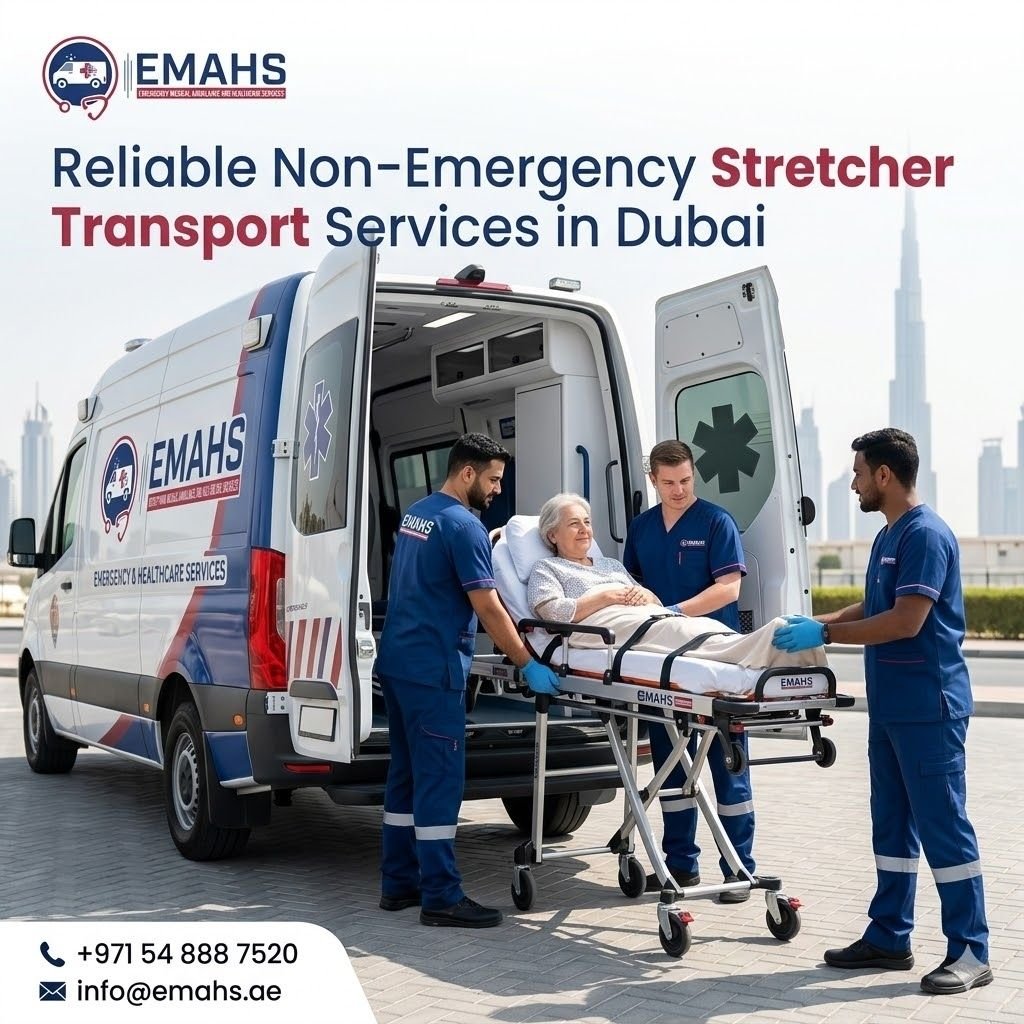
When patients need safe medical transportation but are not in a critical emergency, non emergency stretcher transport becomes the ideal solution. In a fast-growing healthcare hub like Dubai, families and healthcare providers increasingly rely on stretcher services to move patients safely between homes, hospitals, rehabilitation centers, or airports.
This guide explains how non emergency medical transportation stretcher services work, when to use them, and why they are essential for patient safety and comfort.
What Is Non-Emergency Stretcher Transport?
Non emergency stretcher transport refers to medically assisted transportation for patients who are stable but cannot sit or travel in a regular vehicle.
These services are used for:
- Hospital discharge transfers
- Rehabilitation center visits
- Medical appointments
- Inter-hospital transfers
- Airport medical travel assistance
- Long-distance patient movement
Unlike emergency ambulances, this service is planned and scheduled in advance.
Who Needs Stretcher Services?
Stretcher services are designed for patients who are medically stable but require lying-down transport, such as:
1. Post-Surgery Patients
Patients recovering from surgery who cannot sit comfortably or move independently.
2. Elderly Patients
Seniors with limited mobility or chronic illness conditions.
3. Injured Patients
People with fractures, spinal injuries, or severe pain.
4. Disabled Patients
Individuals with physical limitations requiring assisted transport.
5. Long-Distance Medical Transfers
Patients traveling between facilities or countries under medical supervision.
How Does Non-Emergency Stretcher Transport Work?
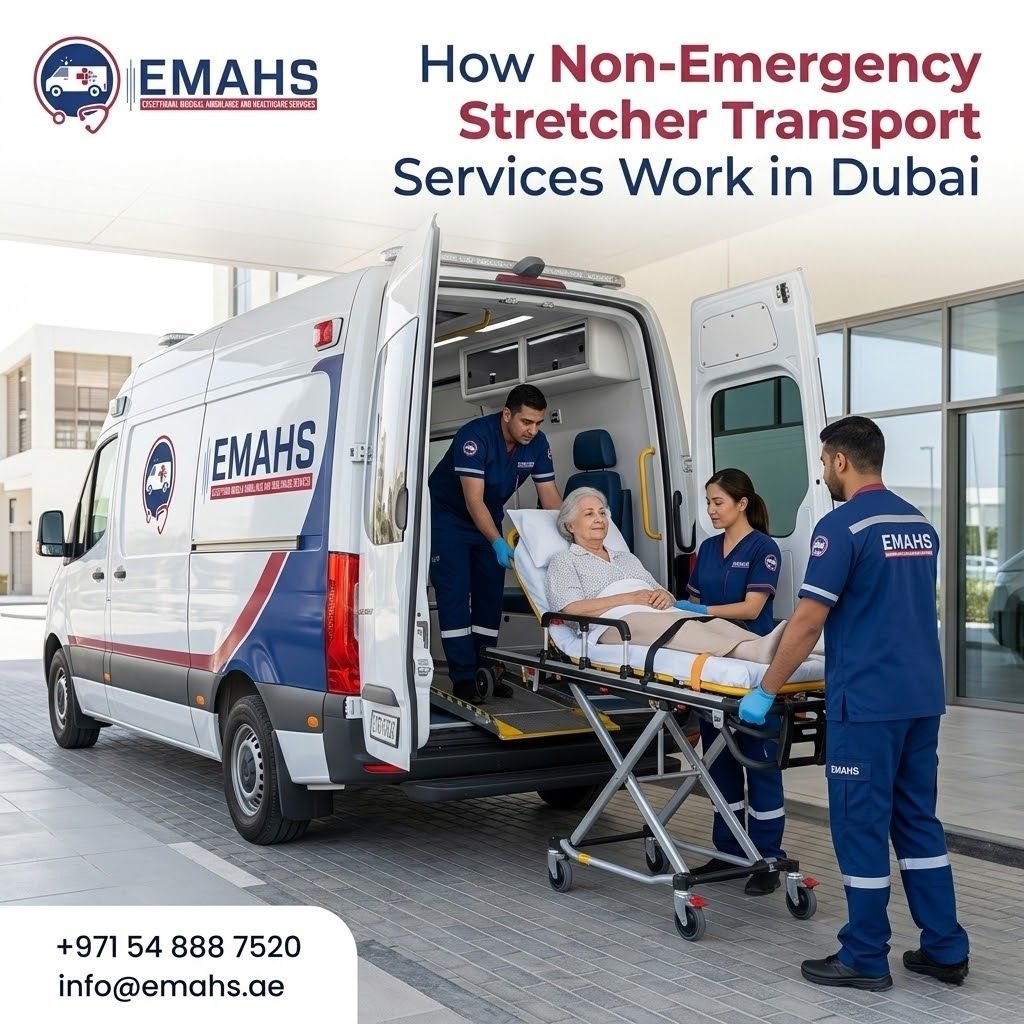
Understanding how does non-emergency stretcher transport work helps families plan better for patient care and safety.
Step 1: Booking the Service
The process begins with scheduling the transport through a medical provider. Patient details, condition, and destination are shared.
Step 2: Medical Assessment
A basic assessment ensures the patient is stable enough for non-emergency transport.
Step 3: Ambulance Preparation
A fully equipped stretcher ambulance is assigned, fitted with:
- Comfortable stretcher bed
- Oxygen support (if needed)
- Monitoring equipment
- Trained medical staff
Step 4: Patient Pickup
Medical staff safely transfer the patient from bed to stretcher and secure them for transport.
Step 5: Monitored Transportation
During travel, the patient is monitored to ensure stability and comfort.
Step 6: Safe Drop-Off
The patient is carefully transferred to the destination facility or home.
Benefits of Non-Emergency Medical Transportation Stretcher
1. Safe and Comfortable Transfer
Patients remain lying down in a stable and secure position throughout the journey.
2. Professional Medical Supervision
Trained staff ensure safety and respond if any medical issue arises.
3. Stress-Free Travel for Families
Relieves families from handling complex patient movement.
4. Reduced Risk of Injury
Proper handling prevents worsening of injuries or pain.
5. Door-to-Door Service
From hospital bed to destination bed, the entire process is managed professionally.
Difference Between Emergency and Non-Emergency Transport
| Feature | Emergency Ambulance | Non Emergency Stretcher Transport |
|---|---|---|
| Purpose | Life-threatening cases | Stable patient transfer |
| Speed | Immediate response | Scheduled booking |
| Medical Team | Advanced emergency care | Basic medical support |
| Equipment | ICU-level setup | Standard stretcher setup |
When Should You Use Stretcher Services?
You should choose non emergency stretcher transport when:
- Patient cannot sit upright
- Hospital discharge is needed
- Follow-up medical visits are scheduled
- Long-distance travel is required
- Patient requires continuous lying-down position
Why Stretcher Transport Is Important in Dubai
In a busy city like Dubai, safe patient mobility is critical. Stretcher services ensure:
- Smooth hospital discharge process
- Safe transportation across long distances
- Reduced strain on caregivers
- Professional handling of fragile patients
It is a vital part of modern healthcare logistics.
Safety Standards in Non-Emergency Transport
All non emergency medical transportation stretcher services follow strict safety guidelines:
- Trained and certified medical staff
- Clean and sanitized ambulances
- Proper patient securing systems
- Monitoring equipment onboard
- Compliance with healthcare regulations
Safety is always the top priority during transport.
Cost Factors for Stretcher Transport Services
The cost of stretcher services depends on:
- Distance of travel
- Level of medical support required
- Type of ambulance used
- Duration of service
- Time of day (urgent vs scheduled)
Despite being specialized, it is often more affordable than emergency ambulance services.
Final Thoughts
Non-emergency stretcher transport is a safe, reliable, and essential service for patients who need medical assistance but are not in critical condition. From hospital discharges to long-distance transfers, stretcher services ensure comfort, safety, and professional care throughout the journey.
Understanding how non-emergency stretcher transport works helps families make informed decisions and ensures patients receive the right level of care at the right time.